Where should a PHP application be hosted?
On a platform that keeps the PHP version supported for you and runs everything the application needs besides web pages: background jobs, scheduled tasks, file storage and the database. For most new business applications that means a platform as a service (PaaS) or a managed PHP host rather than a server your team patches by hand.
- Choose a general PaaS such as Heroku, DigitalOcean App Platform, AWS Elastic Beanstalk or Google App Engine if you want Git-based deploys, scaling on demand and room to add services in other languages later
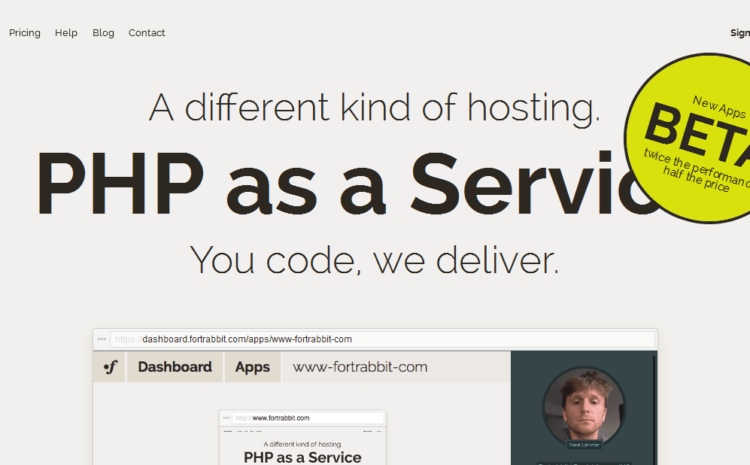
- Choose a PHP-focused platform such as fortrabbit, Upsun or, for Laravel only, Laravel Cloud if the whole application is PHP and you want a host whose defaults already suit Composer, queues and PHP frameworks
- Choose a server you manage only if you have someone whose job includes operating system upgrades, security patches and backups, because on your own server all of that is yours
What changed since this was first written
The 2022 version of this article listed five platforms: Heroku, AppFog, Engine Yard, Amazon AWS and fortrabbit. Three of those entries no longer describe what a buyer would find today.
- AppFog is gone. When we checked on 23 October 2026, the appfog.com domain no longer resolved at all, so a project cannot be deployed there and the old setup advice no longer applies.
- Engine Yard changed shape. Its site now describes deploying containers onto a private Kubernetes cluster inside a dedicated AWS account, leads with Ruby, and names DevFactory as its owner. PHP is still listed, but it is no longer the PHP-first service the old article described.
- "Amazon AWS" was never one platform. AWS is hundreds of services. The part that behaves like a PaaS for PHP is Elastic Beanstalk, and that is the part compared below.
Heroku and fortrabbit are both still running and both still support current PHP. This version replaces the list with the platforms worth comparing now, and with the questions that decide between them.
PaaS, managed PHP host or your own server
All three can run the same Laravel or Symfony application. What differs is who does the work that starts after launch.
- A PaaS builds your code from a Git push, runs it in containers and handles the operating system. You still choose the PHP version, configure workers for queues and connect a database, often as an add-on.
- A managed PHP host is a PaaS narrowed to PHP. fortrabbit, for example, describes itself as running the PHP runtime, MySQL, SSL certificates and daily backups, with a Composer build on every push to the connected GitHub branch.
- Your own server, a cloud virtual machine or a VPS, gives the most control and the most chores. Tools that provision the server for you help, but as fortrabbit's own comparison with Laravel Forge puts it, operating system upgrades and the server bill stay with you.
The deciding question is rarely the monthly bill. It is who will notice and fix a failed backup or an expiring PHP version, and whether that person will still be around in three years.
PHP hosting platforms compared
| Platform | Type | PHP versions offered | Best suited to |
|---|---|---|---|
| Heroku | General PaaS, Git push deploys | 8.1 to 8.5, latest 8.5 by default | Teams that want a large add-on catalogue and may mix languages |
| DigitalOcean App Platform | General PaaS, built on the Heroku PHP buildpack | 8.1 to 8.5, latest 8.5 by default | Smaller applications that want PaaS deploys with fewer moving parts |
| AWS Elastic Beanstalk | PaaS layer over AWS servers | 8.2 to 8.5 on Amazon Linux 2023 | Businesses already on AWS, or with data that has to stay there |
| Google App Engine (standard) | Managed runtime on Google Cloud | 8.2 to 8.5 in support, each with a published end date | Teams on Google Cloud who want fixed, dated runtime support |
| Upsun | PaaS with per-branch environments | 8.4 and 8.5 supported, 8.2 and 8.3 marked deprecated | Agencies and teams that test every branch in its own environment |
| fortrabbit | Managed PHP host on AWS | Any PHP framework or CMS, with presets for Laravel, Symfony, Craft CMS and WordPress | PHP-only projects that want the host to own backups and the runtime |
| Laravel Cloud | Managed platform for Laravel only | Laravel applications | Laravel builds that want autoscaling, managed queues and a preview environment per pull request |
Sources, all checked on 23 October 2026: Heroku's PHP support reference, DigitalOcean's PHP buildpack page, Elastic Beanstalk's supported platforms, App Engine's runtime support schedule, Upsun's PHP documentation, fortrabbit and Laravel Cloud.
Prices are left out on purpose: they change often and depend on usage, so compare them on each vendor's own page for your expected traffic.
Five questions that decide the platform
Most of these platforms will run a typical PHP application well. The differences that hurt show up months later, so ask about them before the first deploy.
- Who upgrades PHP, and with how much notice? App Engine publishes an end-of-support, deprecation and decommission date for every runtime, which is the standard to hold any host to.
- Where do uploaded files go? Container platforms usually throw away the local disk on every deploy, so uploads belong in object storage from day one rather than in a folder that disappears.
- How do queues and scheduled tasks run? Sending email, syncing a CRM or calling an AI model should happen in a background worker. Check that the platform runs workers and a scheduler, and how each is billed.
- Which region holds the data? If customers are in the EU or the UK, choose a region that matches your privacy obligations before the database fills up, because moving it later is a project of its own.
- How hard is it to leave? Standard Composer builds and environment variables move between platforms easily. Platform-specific add-ons and configuration formats are where lock-in hides.
A platform that answers all five clearly is usually a better choice than a cheaper one that answers three. If the application is Laravel, when Laravel is the right fit covers the framework side of the same decision.
The PHP version is the hosting question that expires
Every platform above ties its PHP runtimes to the PHP project's own support dates. The PHP supported versions page (checked 23 October 2026) ends security support for PHP 8.2 on 31 December 2026, and App Engine's schedule ends its php82 runtime support on the same day.
So a new application should start on PHP 8.4 or 8.5, whatever a platform's template happens to suggest. Pin the version in composer.json so a deploy never silently changes it, and put the next upgrade in the plan with a date.
If the language itself is still open, whether PHP is still a good choice for a new web app compares it with Node.js and Python. Existing WordPress sites on shared hosting face the same dates, and what breaks when your host upgrades PHP covers that case.
Hosting an application with AI features
AI features change the hosting brief less than people expect. Most of them call a model provider's API, so the application needs outbound network access, a place to keep API keys outside the code, and timeouts for calls that take several seconds.
The bigger change is background work. Summarising every enquiry or drafting a reply should run in a queue worker, not while the visitor waits, which makes the queues and scheduler question above the one to check first. AI-first app development explains how those decisions are made at the start of a build rather than bolted on later.
When the application hands its results to other tools, such as a CRM or a helpdesk, our workflow automation work connects them. The application itself is what our AI web and app development team builds, and what a Laravel build really costs shows where hosting sits in a quote.
Common questions
Is AWS a PaaS?
Not as a whole. AWS is a large set of cloud services, most of which you assemble yourself. Elastic Beanstalk is the AWS service that behaves like a PaaS for PHP: you upload the application and it runs it on a managed PHP platform.
Does Heroku still support PHP?
Yes. Heroku's PHP support reference, checked on 23 October 2026, lists the PHP 8.1 to 8.5 series and gives applications that do not ask for a version the latest PHP 8.5 by default. It names Laravel and Symfony among the frameworks it supports.
What happened to AppFog?
It is no longer available. When we checked on 23 October 2026, the appfog.com domain did not resolve, so there is nothing to deploy to. A project still documented against AppFog needs moving to one of the platforms compared above.
Can a Laravel application run on a general PaaS?
Yes. Heroku, DigitalOcean App Platform, Elastic Beanstalk and Upsun all run Laravel, and Laravel Cloud runs nothing else. Check how each platform handles queue workers, the scheduler and file uploads, because those are where a Laravel deployment differs from a simple site.
Can you set up hosting for an application you build?
Yes. We build web applications AI-first, usually on Laravel, and deploy them to the platform that fits the project, in accounts you own. Work is quoted per project once the scope is clear (how our projects are priced explains why), so tell us what you are building and we will recommend where it should run.