What is competitor SEO analysis?
It means studying what the sites outranking you publish, how their pages are built and who links to them, then using that to decide what your own site should cover. Most of it can be done from public information, and the watching part can run on a schedule instead of a calendar reminder.
- Compare page by page, not site by site: take the competitor page that ranks for a search you want and ask which buyer question it answers that yours does not
- Use public sources and labelled estimates: their sitemap, their page source and third-party tool figures, never scraped Google results
- Automate the watching, not the writing: a weekly workflow can tell you when a competitor publishes a page, while deciding what to do about it stays with a person

What changed since this was first written
This post began in 2022 as four tips: write content constantly, pick keywords carefully, keep up with SEO news, and keep an eye on competitors. The competitor tip got a single paragraph, which is odd for a post with competitors in its title, and the first tip aged badly.
Google’s guidance on helpful, people-first content (checked 28 October 2026) asks whether a page offers original information or analysis, and whether it is mainly summarizing what others have said. Publishing more just to keep pace with a rival is the habit those questions are written to catch. So this version covers the competitor half properly: what to look at, what to leave alone, and how to stop doing the looking by hand.
What you can see about a competitor, and where it comes from
Search Console reports on properties you have verified, so it tells you nothing about a competitor. What you can learn about them comes from three places: the files and pages they publish, the source code of those pages, and third-party tools that estimate rankings and links from their own crawls.
| Signal | Where to see it | What it tells you | Can a workflow watch it? |
|---|---|---|---|
| Which pages exist | Their XML sitemap, usually listed in robots.txt | What they have chosen to cover, and how much of it | Yes: compare this week’s list of URLs with last week’s |
| New and updated pages | The sitemap’s lastmod dates, or the blog’s RSS feed |
What they are investing in right now | Yes: a feed read or a sitemap comparison on a schedule |
| Titles, headings and descriptions | The page source of each page | Which search each page is aimed at | Yes, for a short list of pages |
| Structured data | The JSON-LD in the page source | Which result types they are going after, such as FAQs or products | Yes, as part of the same fetch |
| What they rank for | Third-party SEO tools, as estimates | Where you overlap, and where nobody is competing | Through the tool’s own export or API, if it has one |
| Who links to them | Third-party backlink tools, as estimates | Which sources in your industry link out at all | Through the tool, not by crawling the web yourself |
| Offer and pricing pages | The pages themselves | How they position against you, which matters more than any ranking | Yes: an alert when the page text changes |
Treat the bottom rows with care. Ranking and backlink figures from any tool are that tool’s estimate from its own crawl, and two tools will disagree. They are good for spotting a gap and poor for precise comparisons, so compare trends inside one tool rather than numbers across two.
The top rows are the opposite: they are facts the competitor published. Google’s sitemap documentation describes listing a sitemap in robots.txt, so for most sites the full list of pages is one file away.
Three things that look like research and are not
Some competitor tactics cost more than they return, and Google’s spam policies (checked 28 October 2026) spell out why.
- Scraping Google’s results to check rankings. The policies list scraping results for rank-checking without express permission as machine-generated traffic, which breaks both those policies and Google’s terms of service. Use a tool that licenses its data, and your own Search Console for your own site.
- Buying links to match a competitor’s backlinks. The same policies define link spam as links created mainly to manipulate rankings, and buying links is the first example given. A competitor’s backlink list is a map of who writes about your industry, not a shopping list.
- Rewriting a competitor’s pages. A reworded copy adds nothing a reader cannot already find, and producing many such pages is what the policies call scaled content abuse. The useful question is what their page leaves out.
Turning what you find into a plan
Analysis only matters if it changes what you publish. This order works for most small business sites:
- Pick five searches a buyer would make just before contacting a business like yours, not the broadest terms in your industry.
- For each, open the page that ranks first and note the questions it answers, in the order it answers them.
- Mark what it leaves out: a cost range it avoids, a comparison it skips, a step it glosses over.
- Answer those gaps on your own page with what you actually know, including the trade-offs a competitor would rather not mention.
- Check the result in your own Search Console after a few weeks, by page and by query rather than by the site average.
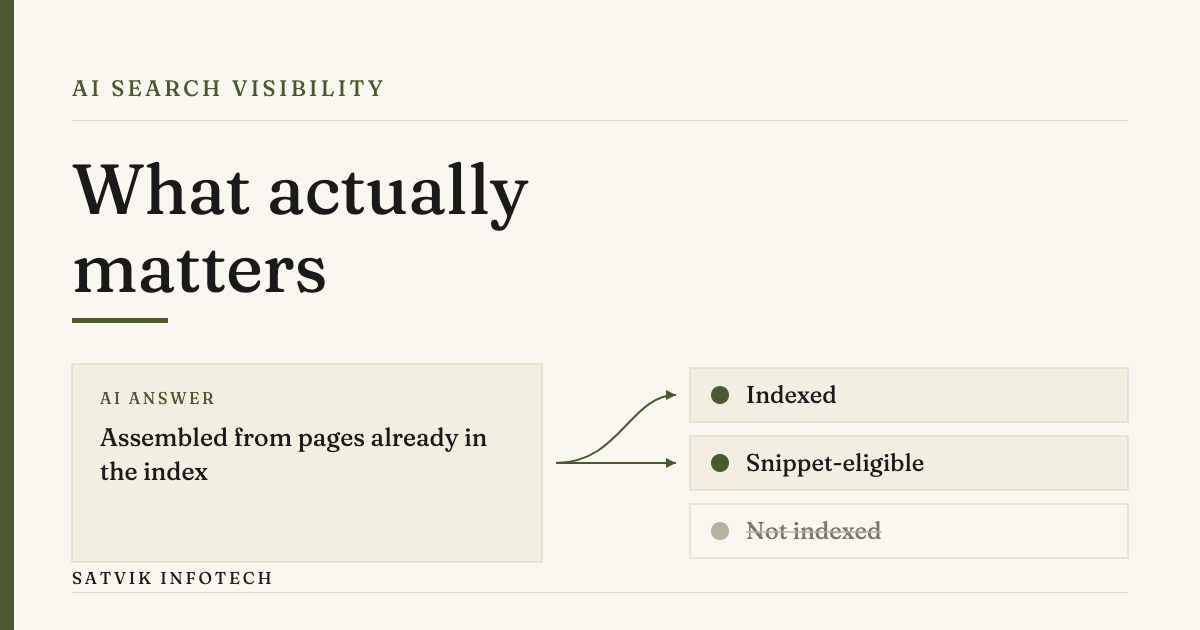
Step four is where the value is, and it is the one a tool cannot do for you. Pages that answer the real question plainly are also the ones assistants quote, which is why visibility in AI search rewards the same work. If you have nowhere to publish those answers yet, whether a business blog is still worth it covers that decision.
Automating the watching
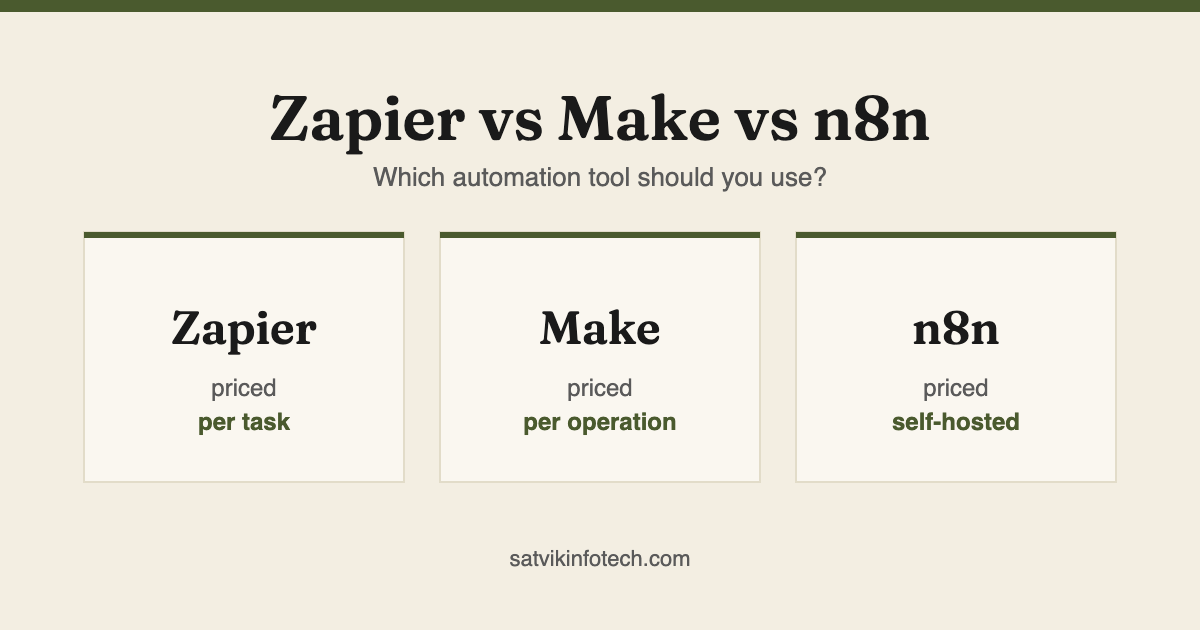
The part worth automating is the dull, repeating check: has anything changed since last week? Done by hand it is the first task to slip, and done by a workflow it keeps running without anyone remembering. A typical build in Zapier, Make or n8n has five steps:
- A schedule starts the workflow once a week. n8n’s Schedule Trigger node works like the cron utility on a server.
- A web request fetches each competitor’s sitemap, or a feed step reads their blog’s RSS feed.
- The workflow compares the URLs with last week’s list, kept in a spreadsheet or a small database, and keeps only the new ones.
- For each new page, a second request fetches it and an HTML step extracts the title, the main heading and the description.
- A summary lands in Slack or email: what is new, where it is, and what it appears to target.
Keep it polite. Fetch a handful of pages a week rather than a whole site, and respect each site’s robots.txt. A workflow that hammers a competitor’s server is bad manners and the quickest way to get blocked.
Like every automation it will break eventually, usually when a competitor redesigns and their page structure changes. Decide up front who fixes your automations when they break, or the alerts stop and nobody notices.
Where AI helps, and where it does not
A language model is good at the step between the fetch and the person: reading a new competitor page and summarizing it in three lines, tagging it by topic, or flagging that a pricing page now mentions a new plan. That turns a list of URLs into something a busy owner will actually read. It is the same pattern as any AI automation, with a model in the middle of a workflow doing the reading.
It is poor at the decision. A model asked to write a better version of a competitor’s page produces a reworded copy, which is the scaled content problem above in a faster form. Keep the model on summaries, and leave the writing, and the judgement about what is worth writing, to someone who knows your customers.
What we build, and what we do not
Satvik Infotech does not sell SEO services. What we build is the machinery around it: the weekly competitor check described above, as part of workflow automation, and the CRM setup and management that makes sure every enquiry a better page brings in gets a reply the same day.
If you want the monitoring set up, tell us which competitors and pages matter and we will scope it. Cost, timing and ownership questions are covered on our answers page.
Common questions
How do I find out what keywords my competitors rank for?
Only through third-party tools, because Google does not publish another site’s rankings and Search Console only covers sites you have verified. SEO tools estimate a competitor’s rankings from their own crawls, so treat the figures as estimates and compare trends inside one tool rather than numbers across two.
Is it acceptable to monitor a competitor’s website automatically?
Reading public pages at a gentle rate is normal, and a weekly check of a sitemap and a few pages is a light load. Respect the site’s robots.txt and terms, never log in to anything, and do not scrape Google’s results, which Google’s spam policies prohibit without express permission.
Should I copy my competitor’s backlinks?
Use their backlinks as a list of who writes about your industry, not as links to buy. Paying for links is the first example of link spam in Google’s spam policies. Earn a mention from those same sources by publishing a page worth citing.
How often should I check competitors’ SEO?
Weekly is enough for most small businesses, because sites rarely change faster than that and a weekly summary is short enough to read. A quarterly deeper look at rankings and links in an SEO tool covers the slower-moving signals.
Can you build a competitor monitoring workflow for us?
Yes. We build it in n8n, Make or Zapier depending on what you already use: a weekly check of competitors’ sitemaps or feeds, an AI summary of anything new, and a message in Slack or email. We do not run SEO campaigns; the workflow is the part we build.